# How Does a Grassroots Digital Community Become Cultural Heritage?
On October 8, 2026, COST Action GRADE – Grassroots of Digital Europe – held its final in-person meeting in Warsaw. Titled Bits Behind the Curtain and organized by the Foundation for the History of Home Computer, the event brought together researchers, practitioners and people involved in grassroots digital communities to discuss the history, preservation and exhibition of Europe’s digital heritage.
I closed the afternoon Presentation Panel with a talk about the Polish demoscene’s path to intangible cultural heritage. I had told this story before, but usually from the perspective of the demoscene itself. This time, with other grassroots communities beginning to ask similar questions about their own practices and heritage, I wanted to look at what we had learned from the process.
The talk became less about how the demoscene became cultural heritage and more about how a community might recognize itself as cultural heritage in the first place.
What follows is an edited reconstruction based on the original slides and speaker notes, lightly adapted for reading.
The story I want to tell is about the demoscene and UNESCO.
But it is not really a story about UNESCO.
And it is not a guide to getting your community onto a heritage list.
What interests me is that other grassroots communities are beginning to ask the same questions we eventually had to ask ourselves.
When does a hobby become something more than a hobby? When does a group of people doing things together become a community? When does that community begin to think about continuity, transmission and safeguarding?
And, eventually: could what we are doing actually be cultural heritage?
This is already happening outside the demoscene.
In Germany, board game playing was recognized as intangible cultural heritage first at the regional level, in Thuringia and Bavaria, and later at the national level.
More recently, people from the Polish fantasy fandom approached me because they had started thinking about a similar path for their own community.
Board gamers. Fantasy fandom. Demosceners.
You could add retrocomputing communities, free software communities, hackerspaces, makers and many others.
They may look very different from the outside. But once you stop looking only at what these communities produce or consume, similar questions begin to appear.
And that is what I want to focus on: not how the demoscene became heritage, but what we had to understand about ourselves before the concept of heritage even made sense.

Real-time procedural graphics from Beautypi.
Pol Jeremias & Iñigo Quilez, Beauty: Real-Time Visuals, ACM SIGGRAPH 2012 Computer Animation Festival, 2012
If you know the demoscene, you know the basic story.
People, computers, creativity, competition, parties.
People writing code, making graphics and music, forming groups and trying to make machines do things they were never really designed to do.
In Poland, this culture developed under particular conditions.
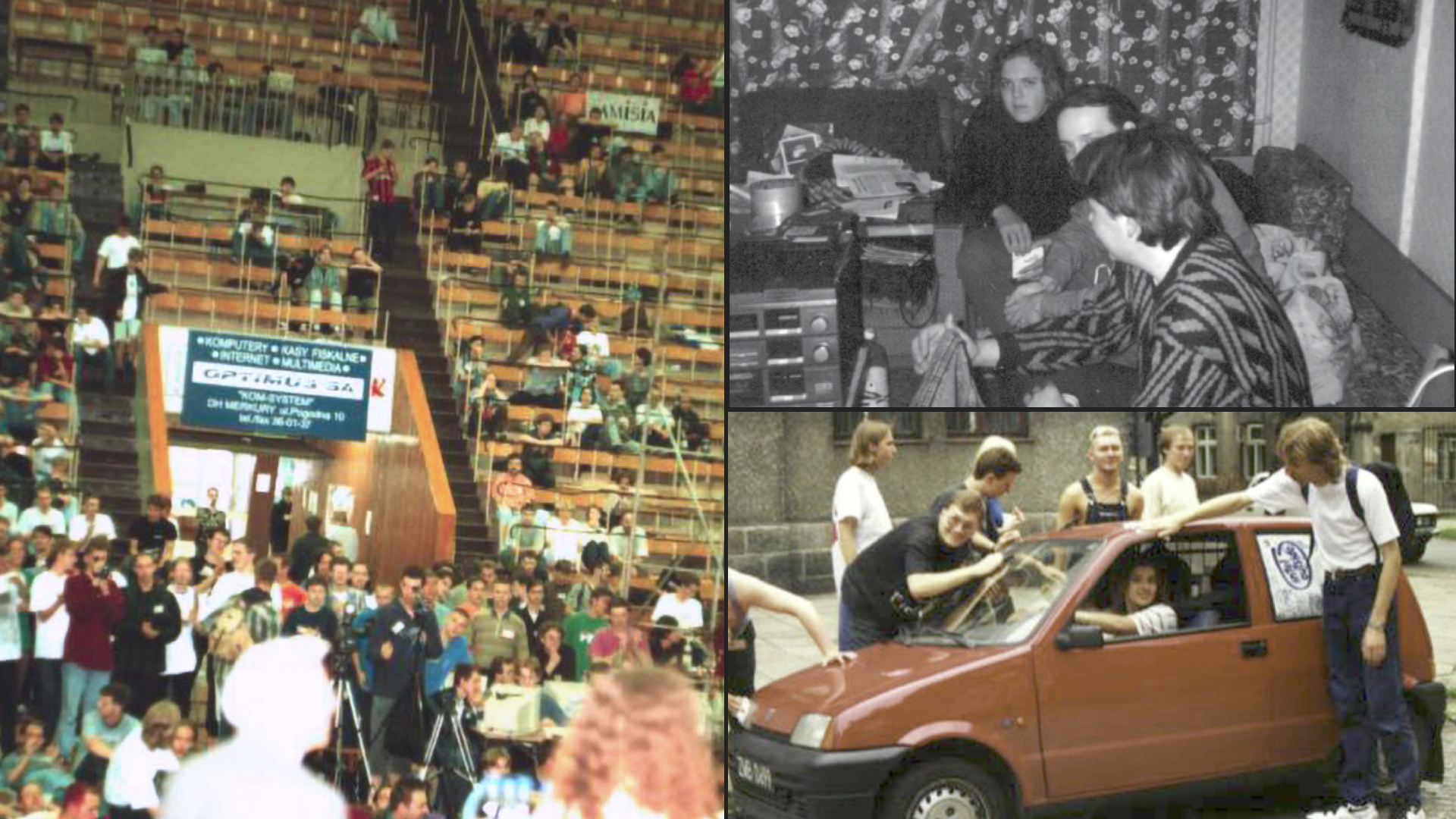
Informal gatherings of the early Polish demoscene.
Kronika Polskiej Demosceny, 2023.
There was very little money. Computers were difficult to get. Poland was going through a political and economic transformation.
There was no institutional infrastructure supporting any of this. Parties were often organized by teenagers who simply decided that a party should happen.
There were computer exchanges, teletext, handwritten letters and floppy disks travelling through the post, around Poland and across borders.
Before widespread access to the Internet, people still somehow found each other. They exchanged software and knowledge, formed groups, published diskmags, competed and collaborated.
And in the process, without necessarily intending to, they built a community.
UNESCO and the language of cultural heritage.
Karolis Kavolelis / Shutterstock
But there is one thing we definitely were not thinking about when we were sixteen, swapping floppy disks.
Cultural heritage.
Nobody was putting a disk into an envelope and thinking:
I am now transmitting intangible cultural heritage to future generations.
Nobody was thinking about safeguarding.
Nobody was thinking about UNESCO.
We were simply doing it.
And this distinction becomes important later, because cultural practices usually exist long before anyone gives them the language of cultural heritage.
Then thirty years passed.
The platforms changed. People grew up. Postal swapping almost disappeared. The Internet transformed communication and distribution.
You might expect a community so closely tied to a particular technological moment to disappear together with that moment.
But it did not.
People who met as teenagers still meet. Some disappear for five, ten or twenty years and then come back. New parties appear. New people join.
And people still call themselves demosceners.
The scene changed enormously, but somehow it remained the scene.
And this is where UNESCO suddenly becomes interesting.
One of the first things we had to understand was that heritage does not simply mean old.
When people hear the word “heritage”, they often imagine monuments, old buildings, archaeological sites or historical objects. Something survives long enough and eventually somebody decides that it is heritage.
But intangible cultural heritage works differently.
Living heritage is inherited from the past, but it also exists in the present. It is practised now. It is transmitted between people and constantly recreated by communities.
So the important question for us was not:
Is the demoscene old enough?
It was:
Is it still alive?
And the answer was clearly yes.
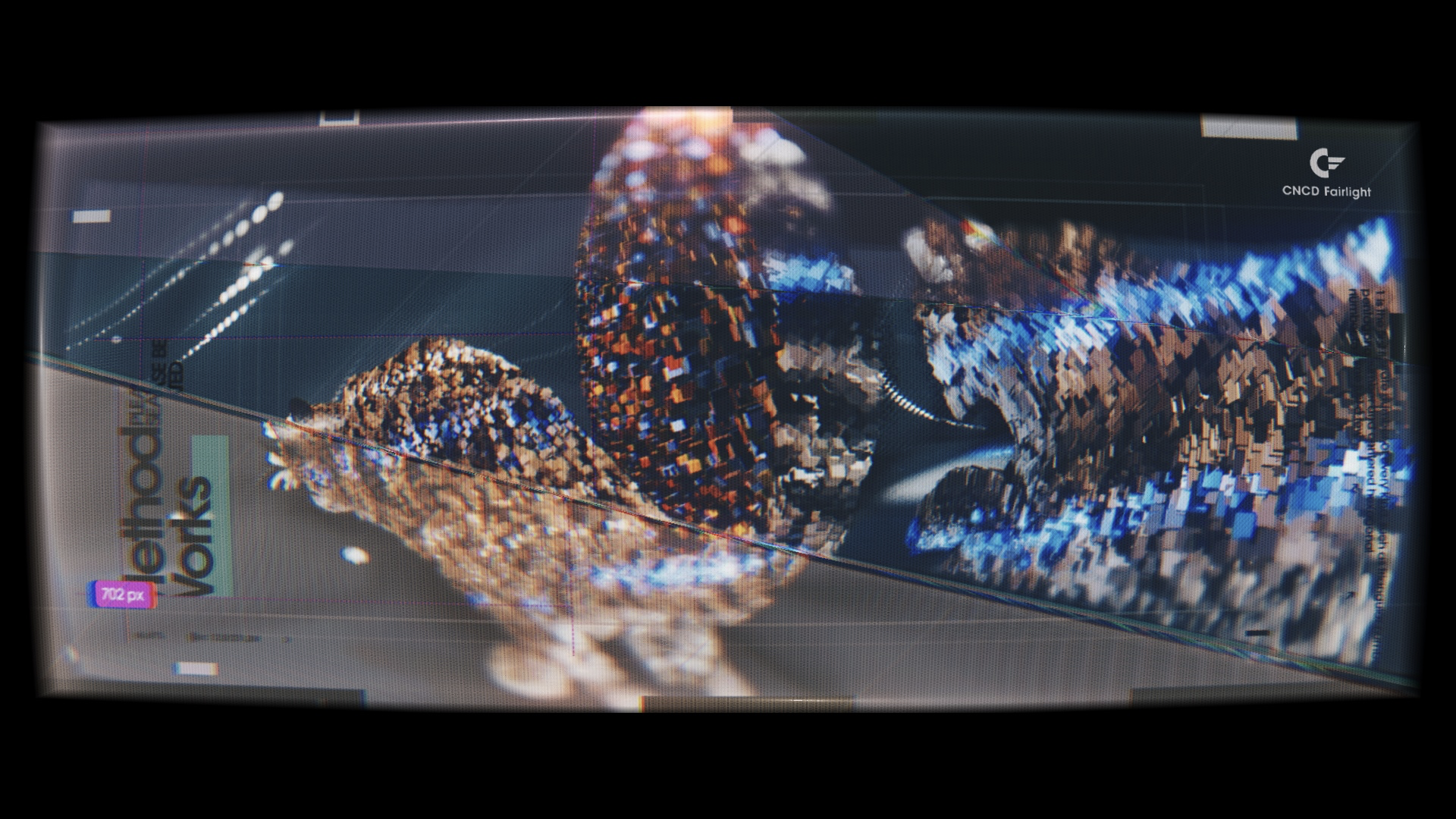
Screenshot from Number One/Another One
CNCD + Fairlight, 2018
At first, however, we made what now seems like an obvious mistake.
Everyone in the demoscene loves demos. They are the scene’s most visible output: released at parties, watched, collected and archived.
So naturally we thought: here is our heritage.
The demos.
But when we started looking seriously at the UNESCO Convention, something did not quite fit.
The definition does not begin with objects.
It begins with practices, representations, expressions, knowledge and skills — and with the communities that recognize them as part of their cultural heritage.
That changes the perspective completely.
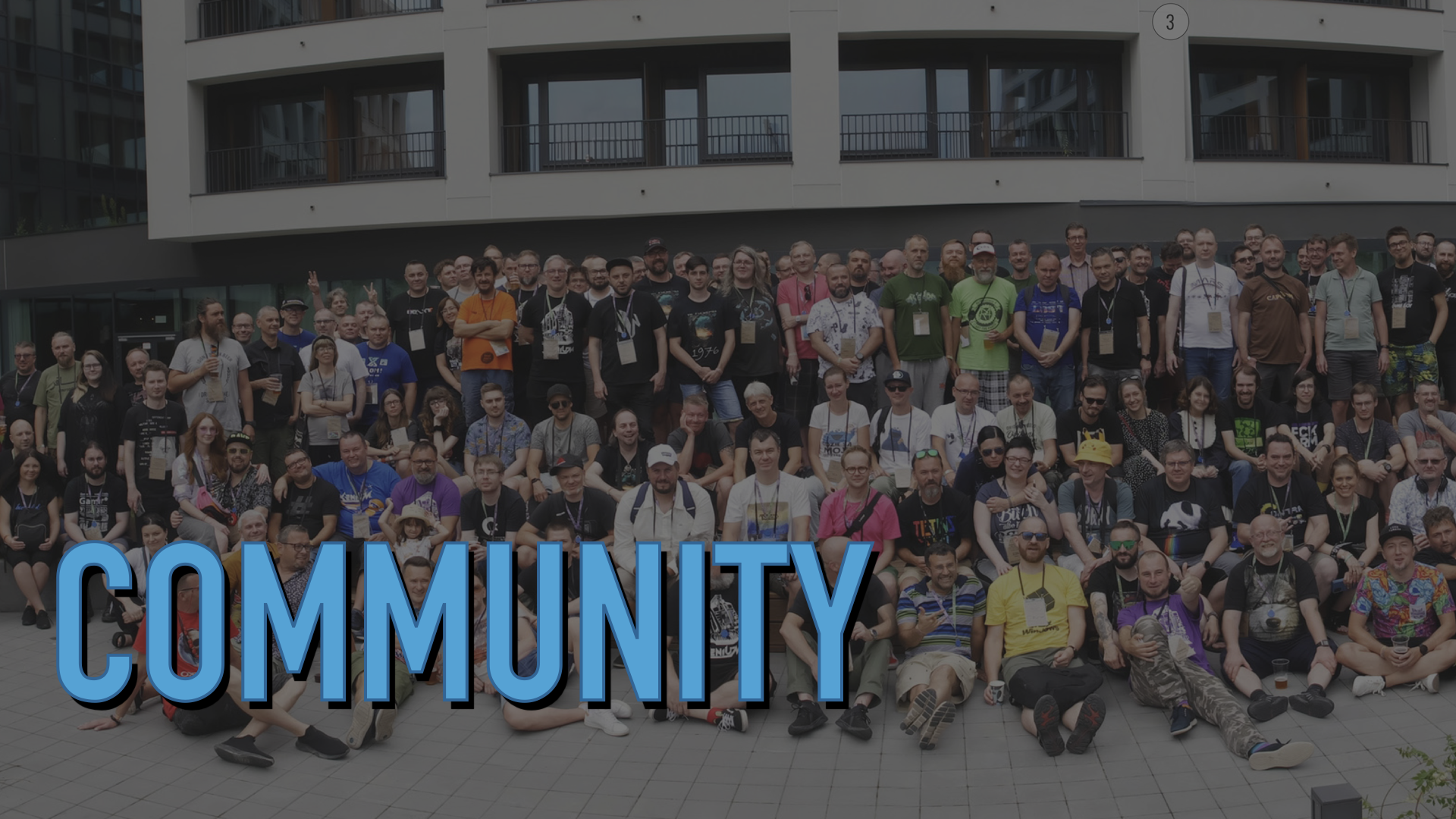
The demoscene becomes visible as a community.
Xenium / Kronika Polskiej Demosceny, 2023
The community has to come first.
Not UNESCO. Not the Ministry of Culture. Not researchers documenting the scene.
The community itself.
Intangible cultural heritage begins with communities, groups and individuals recognizing their practices as part of their own cultural heritage.
An outside institution cannot simply arrive and declare:
Congratulations. You are now a cultural tradition.
For an informal community like the demoscene, this immediately raises an interesting problem.
What exactly is the community?
We have no membership cards. No president. No headquarters. There is no universally accepted definition of who qualifies as a scener.
There is no institution you join.
And yet people know.
They say:
“I’m part of the scene.”
And this is where I would turn the question towards any other community thinking about cultural heritage.
Before asking whether an institution might recognize you, ask:
Who is “we”?
Who considers themselves part of the community? Who creates its culture, maintains it and passes it on? Where are its boundaries? Are they defined by an organization, by participation, by shared knowledge, by relationships — or simply by people recognizing each other as belonging to the same thing?
For the demoscene, we discovered that we did not need an official membership list to answer this.
The answer was already present in the way people talked about themselves and each other. They had nicknames, groups and roles. They shared events and history. They recognized other sceners, and they recognized themselves as sceners.
So “Who is we?” sounds like a simple question.
It is not.
It asks the community to identify the subject of its heritage.
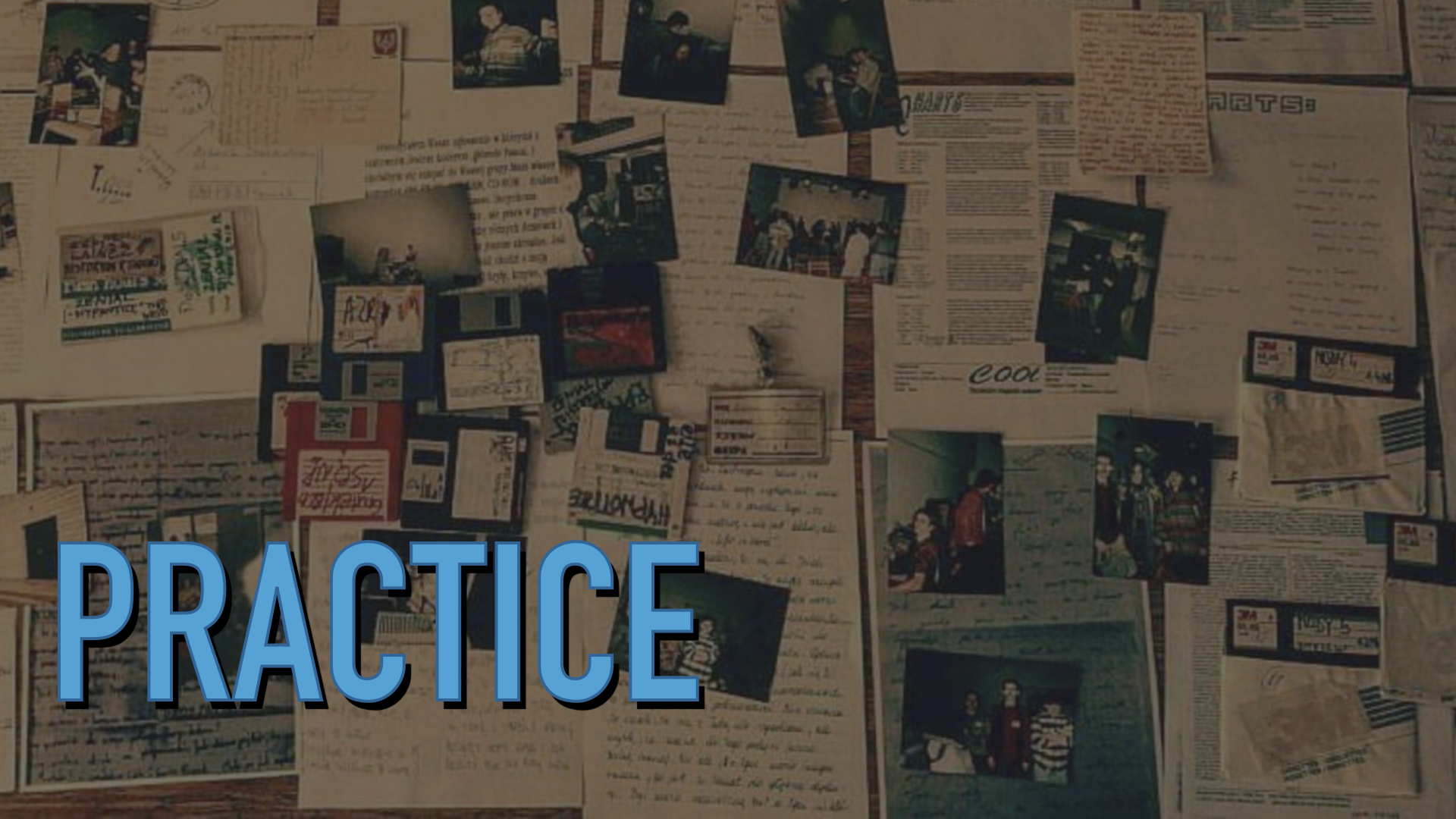
The demoscene is a practice, not just its artefacts.
Łukasz 'Zenial' Szałankiewicz archive / Kronika Polskiej Demosceny, 2023
Once we stopped looking only at the products of the demoscene, another shift happened.
We started noticing everything that happened around them.
Swapping.
Forming groups.
Coding.
Pixel art.
Tracking.
Diskmags.
Compos.
Greetings.
Nicknames.
Demoparties.
These are not separate curiosities. Together, they describe a way of participating in the scene.
And this led us to a distinction that became extremely useful:
The demo is an artefact. The demoscene is a practice.
For the demoscene, the obvious answer is: we make demos.
Creating them — combining code, graphics and music, often while exploring the limits of a particular computer platform — is at the heart of the practice.
But looking at the practice also reveals everything that makes this culture of creation possible. Demos are made in groups, presented and judged at demoparties, shared and discussed. Knowledge and skills are passed between participants.
So the point is not that demos are merely artefacts and the “real” heritage lies somewhere else. The practice is the culture of creating demos, together with the ways that culture is organized, shared and transmitted.
The same question can be useful for other communities:
What do you actually do?
What allows people to participate in it, learn it, share it and pass it on?
In other words: don’t stop at what your community produces. Ask what people actually do to keep producing it.
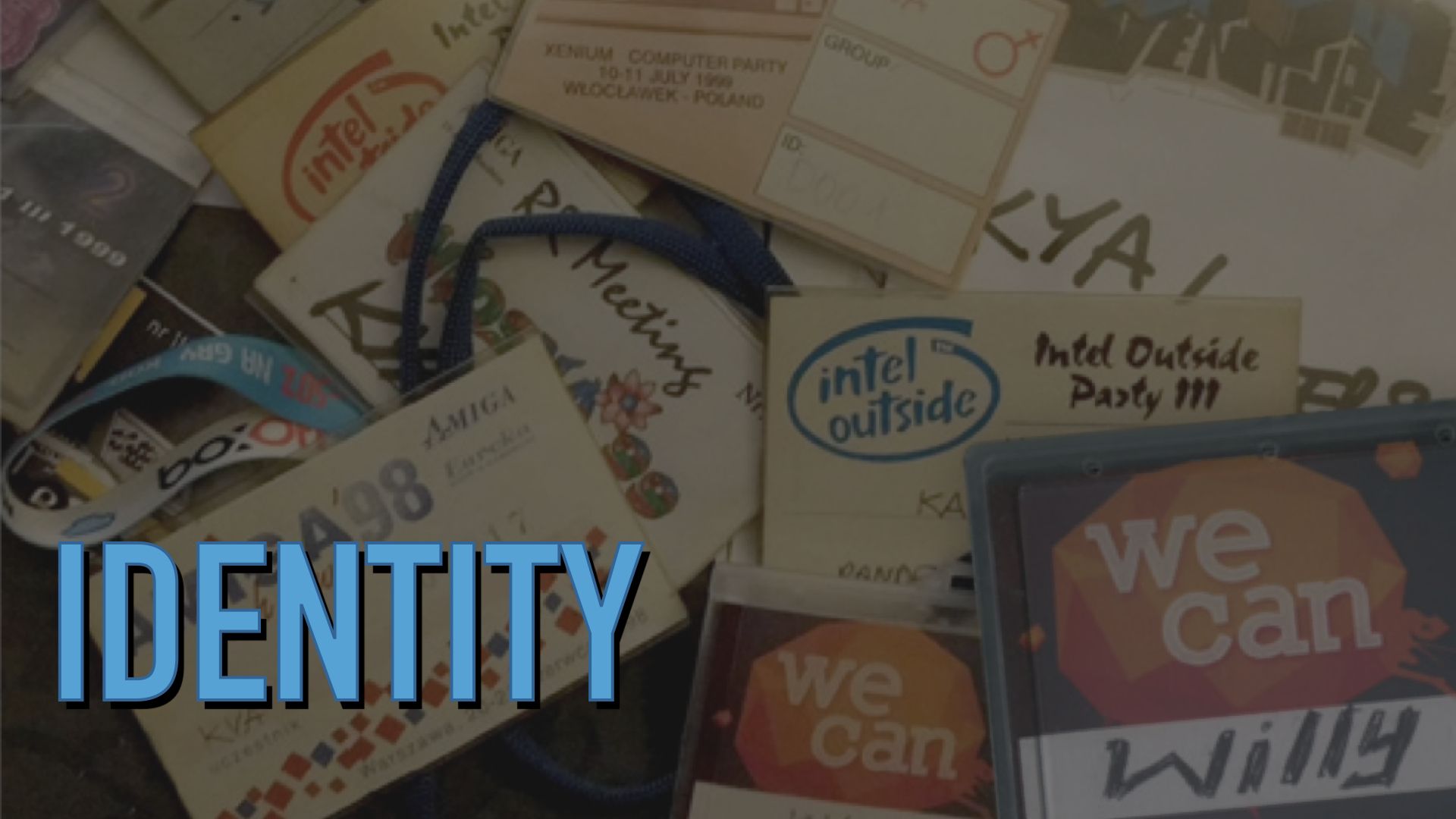
Nicknames, groups and badges make belonging visible.
Kronika Polskiej Demosceny, 2023
The Convention also says that intangible cultural heritage provides communities with a sense of identity and continuity.
With the demoscene, this goes much further than saying:
“I used an Atari.”
People say:
“I was a swapper.”
“I was in Arise.”
“I am a scener.”
“I still meet these people.”
“These are lifelong friendships.”
Nicknames, groups, roles, platforms, parties and shared history become part of how people describe themselves.
For many, the scene became part of their biography.
Someone may stop being active for ten or twenty years and still describe themselves as a scener.
That is a very different relationship from simply enjoying a hobby.
What makes someone say: “I’m one of them”?
What turns participation into belonging?
Is it shared history? A particular vocabulary? Events everyone knows? Roles people take on? Skills? Values? Friendships? Stories that get repeated?
Perhaps it is the feeling that you can disappear for ten years, come back and somehow still be “one of us”.
For the demoscene, it was a mixture of all of these things.
The technology mattered, of course, but the identity was never reducible to the machine. Platforms changed. People moved between them. Technology evolved.
What remained was the sense that there was a scene — and that you belonged to it.
Another community may find that identity somewhere completely different.
But it needs to be able to ask what creates it.
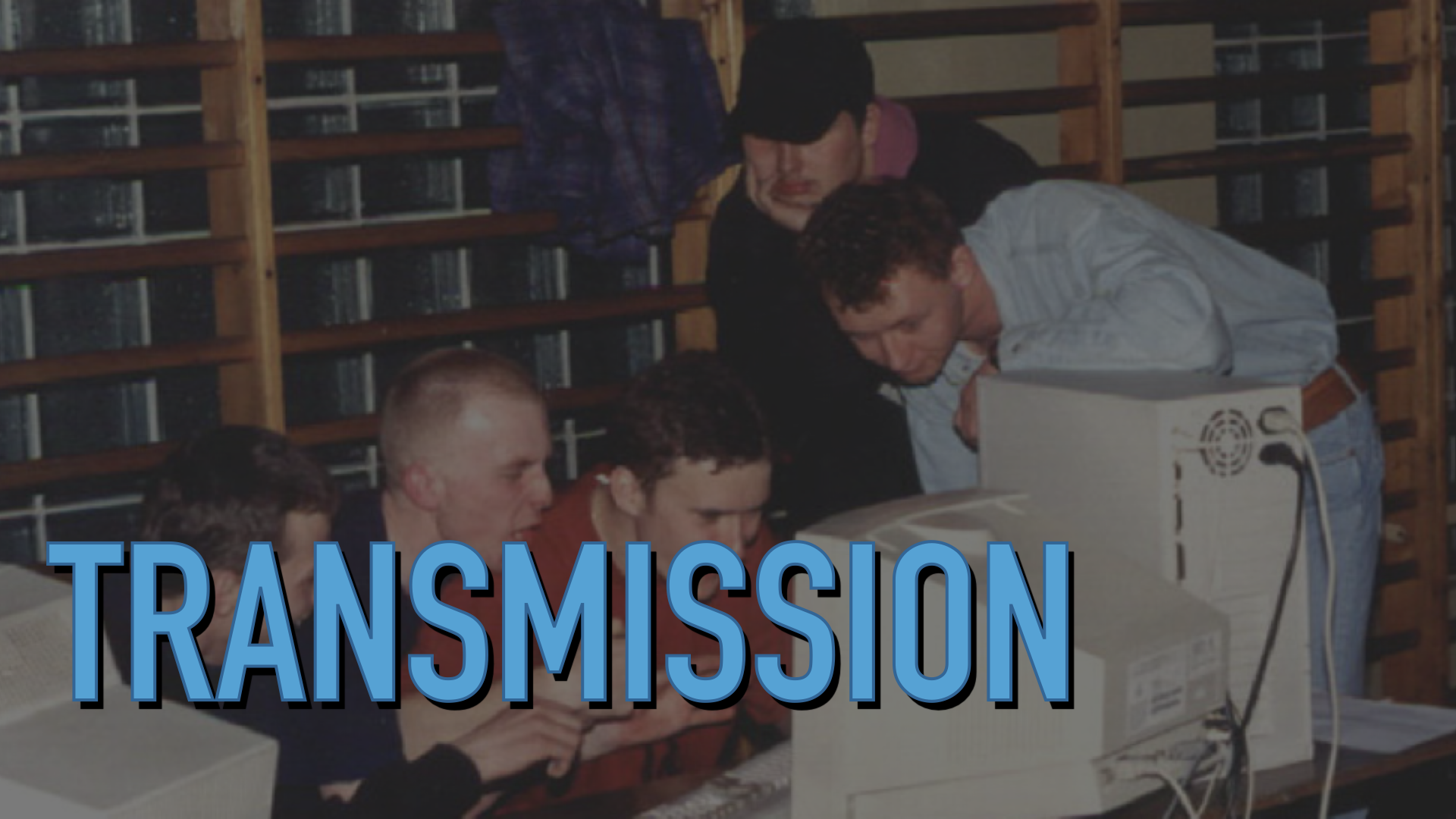
Knowledge travelled from person to person.
RR Meeting 1997 / Kronika Polskiej Demosceny, 2023
Identity alone, however, is not enough for a living culture to continue.
Knowledge and practice have to move between people.
UNESCO calls this transmission.
For us, there was no school of demoscene. Nobody enrolled in Introduction to Demoscene Culture.
Most knowledge circulated informally.
You joined a group. You watched what other people were doing. You tried something yourself. You asked questions. Somebody showed you a trick. Maybe you got some source code. Maybe somebody explained how an effect worked, how to draw a logo or how to use a tracker.
Eventually, you made something together.
We learned by doing.
And very often, we learned from each other.
How does a newcomer become one of you?
This is not quite the same question as: how do people learn the necessary technical skills?
For the demoscene, learning to code, draw or make music was only part of it.
A newcomer also learned how groups worked. What happened at a demoparty. What a compo was. Why people put greetings in productions. How releases circulated. Who all these people with strange nicknames were.
In other words, they were learning how to participate in a culture.
So look at your own community.
What happens when somebody new arrives? Who shows them what to do? Where do they learn? Does knowledge come through documentation, mentorship, imitation, collaboration, events — or simply from other participants?
For the demoscene, the answer was remarkably informal:
You became part of the scene by participating in the scene.
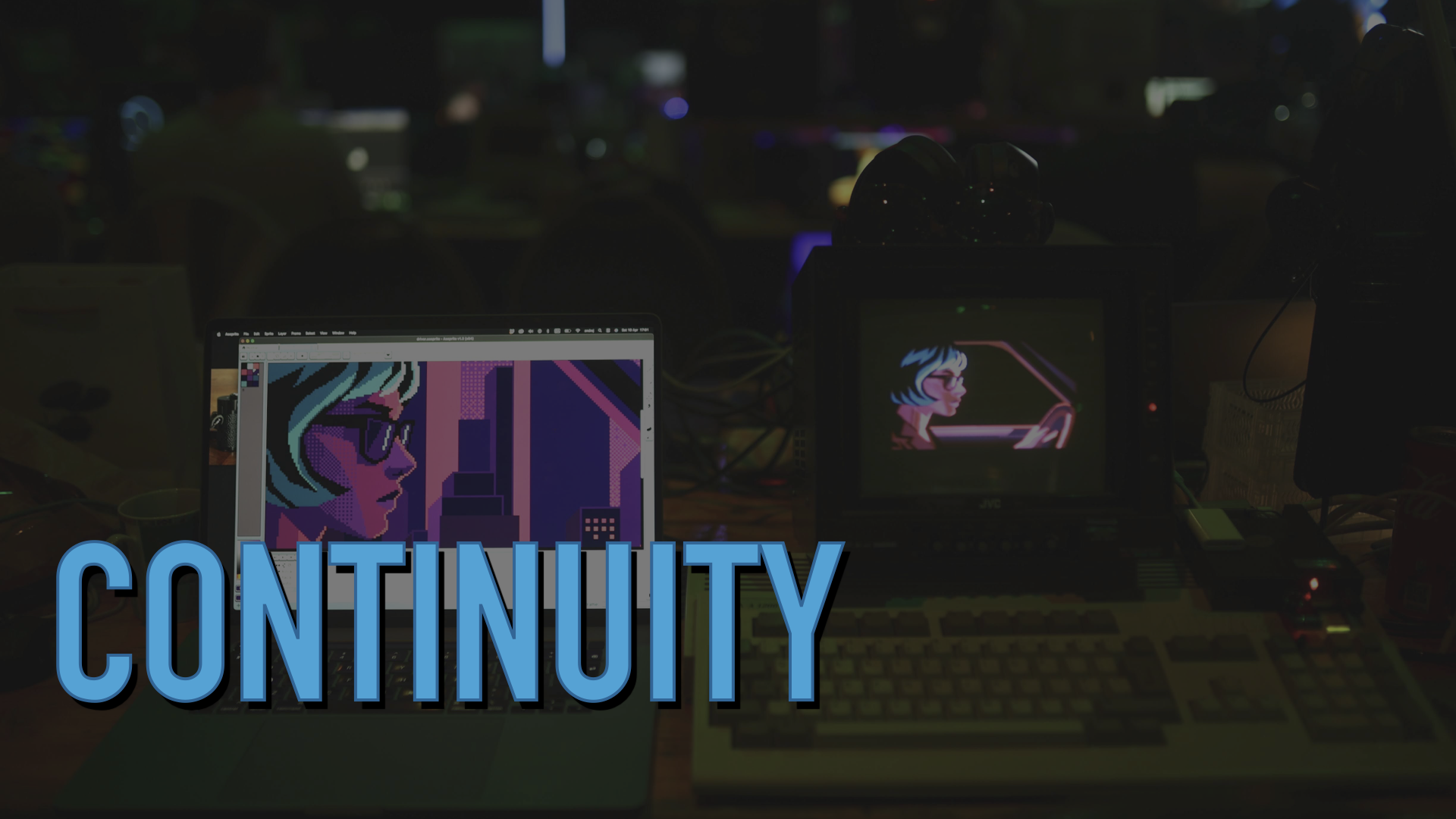
Old platform, contemporary tools, living practice.
Akiko / Almagest, Shinya 1986, 2025
This photograph is a good example of why all of this matters.
It is not a historical photograph. It was taken at Revision 2025, the biggest demoparty in Saarbrücken, Germany.
The Amiga may be decades old.
But this is not a reconstruction.
Nobody is reenacting the demoscene for a museum exhibition.
This is happening now.
People are meeting, making productions, showing them, competing and participating in the scene today.
Despite everything that has changed around it, the practice continues.
What stays the same over time?
For the demoscene, it clearly was not the technology.
We went from letters and floppy disks to BBSes, FTP servers and the Internet. Platforms changed. Tools changed. Some practices, like large-scale postal swapping, almost disappeared.
And yet people on both sides of those changes recognize what they are doing as part of the same cultural continuum.
So what creates that continuity?
For us, it seems to be found more in practices and relationships than in any particular machine: making productions, organizing ourselves into groups, meeting at parties, competing and collaborating, passing knowledge around, maintaining friendships and identifying ourselves as part of the scene.
Another community may find continuity somewhere completely different.
But it has to ask the question.
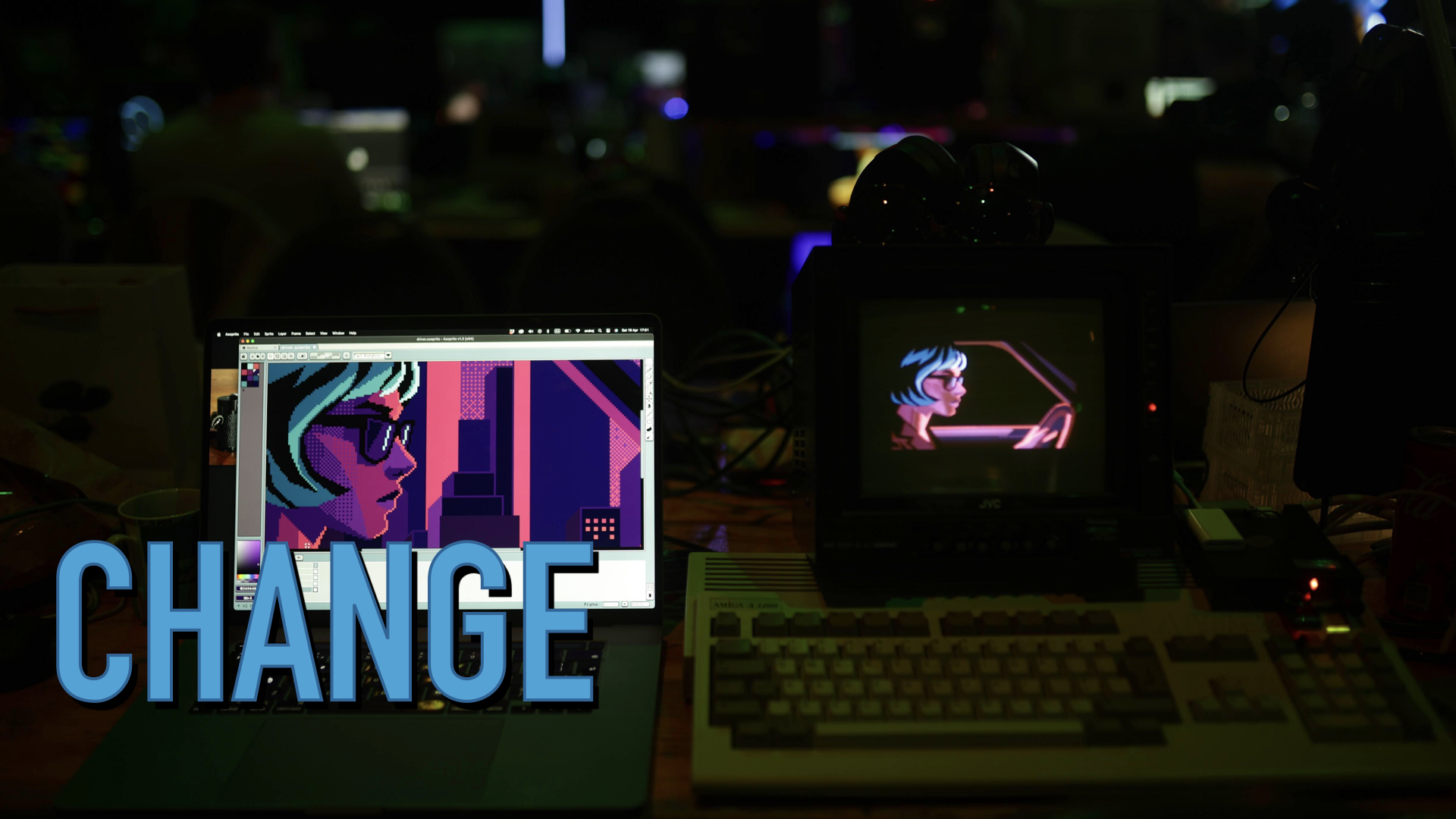
The practice continues by changing
Akiko / Almagest, Shinya 1986, 2025
And then you have to turn that question around.
Living heritage cannot mean repeating exactly the same thing forever.
The Convention describes intangible cultural heritage as something that communities constantly recreate.
So change is not necessarily a threat to continuity.
It may be what makes continuity possible.
The demoscene is a good example precisely because it has changed so much.
The communication infrastructure changed almost completely. Hardware and software changed. The social context changed. The people themselves grew older. New people joined without experiencing the world in which the scene originally developed.
And nevertheless, there is continuity.
What can change without losing what matters?
For us, swapping could almost disappear without the demoscene disappearing.
Communication could move to the Internet.
New platforms could become part of the scene.
Parties could change their formats.
New tools could replace old ones.
This does not mean that every change is irrelevant. It means that continuity should not be confused with keeping everything exactly as it was.
And this becomes particularly important when we start talking about safeguarding.
Because if heritage means preserving one supposedly authentic version of a culture forever, we may actually prevent it from remaining alive.
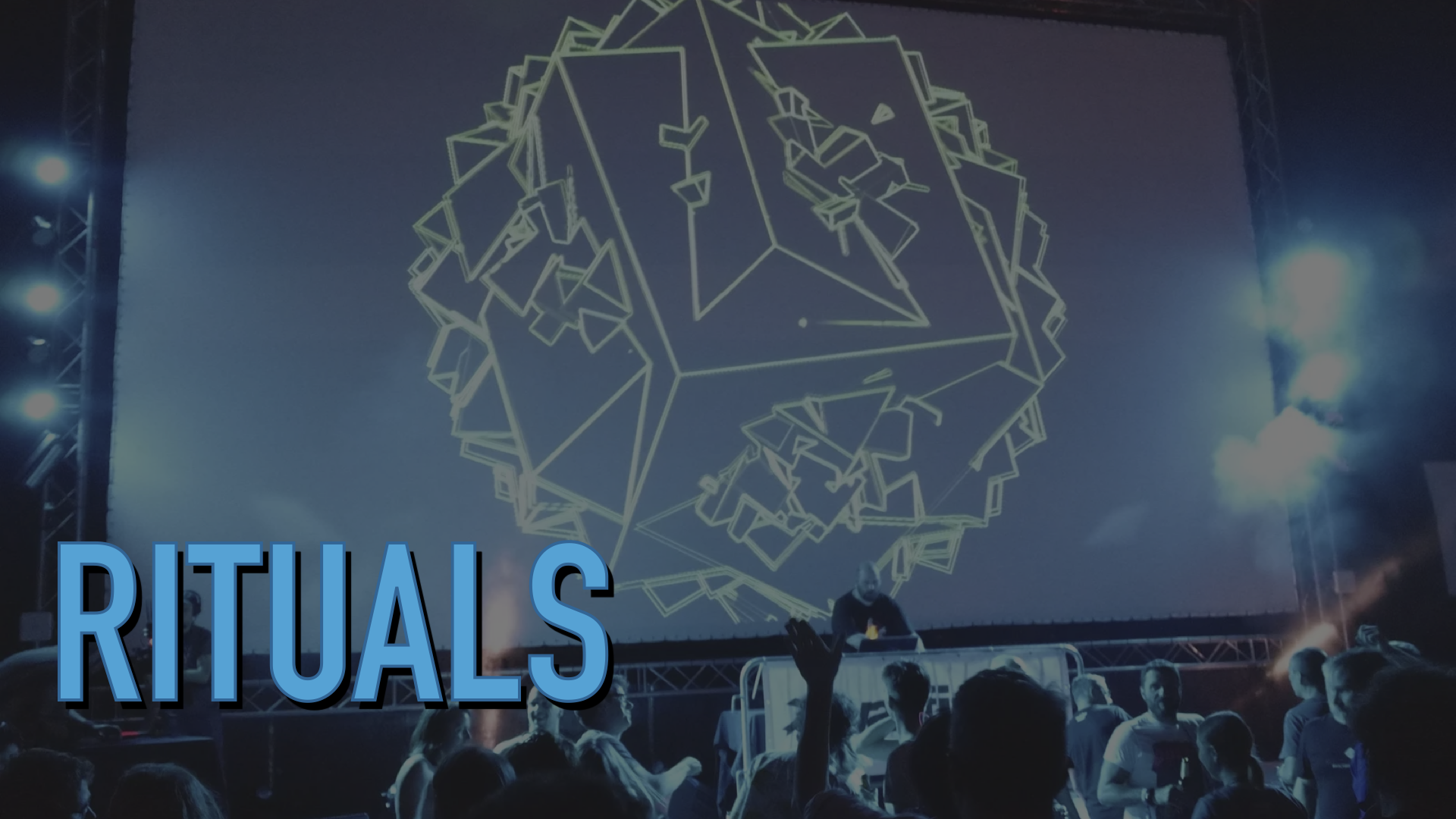
Demoparties are where the community performs itself.
Tobias Kopka, Revision Demoparty, 2019.
The Convention also mentions social practices, rituals and festive events.
Which brings us to the demoparty.
What exactly is a demoparty?
A conference?
Not really.
An exhibition?
Not really.
A competition?
A little bit.
There are competitions, of course. There are presentations, screens, computers and sometimes lectures.
But none of those descriptions really explains why people travel hundreds or thousands of kilometres to be there.
A demoparty is also a moment when the community becomes physically visible to itself.
People meet. Old relationships are renewed. New people are introduced. Productions are shown in front of peers. Stories are repeated. Shared practices are performed again.
For a few days, something that normally exists across countries, computers and online communication occupies one physical place.
Where does your community become visible to itself?
For us, one of the answers is obvious: the demoparty.
For another community it might be a conference. A hackathon. An installfest. A LAN party. A repair café. A Maker Faire. An annual meeting.
The point is not whether the event looks like a traditional ritual.
The question is whether there is a recurring moment or place where the community gathers, recognizes itself and reaffirms that it exists.
Digital communities are particularly interesting here because it is easy to reduce them to technology.
A computer. A platform. A piece of software. A file format. A repository.
But communities also develop gatherings, rituals, roles, ways of learning and ways of recognizing one another.
And those things can be much harder to archive than software.

And this brings us to safeguarding.
When computer people hear “we have to preserve this”, the instinctive response is usually:
Archive everything.
And archives are essential.
But in the language of intangible cultural heritage, safeguarding means something broader: identification, documentation, research, preservation, protection, promotion, transmission and revitalization.
The goal is not to freeze the demoscene at some supposedly authentic moment in its history. It is to keep the practice viable — to make it possible for it to continue.
Once you think about the demoscene as a living cultural practice rather than only as a collection of digital objects, preserving the files is necessary.
But it is not enough.
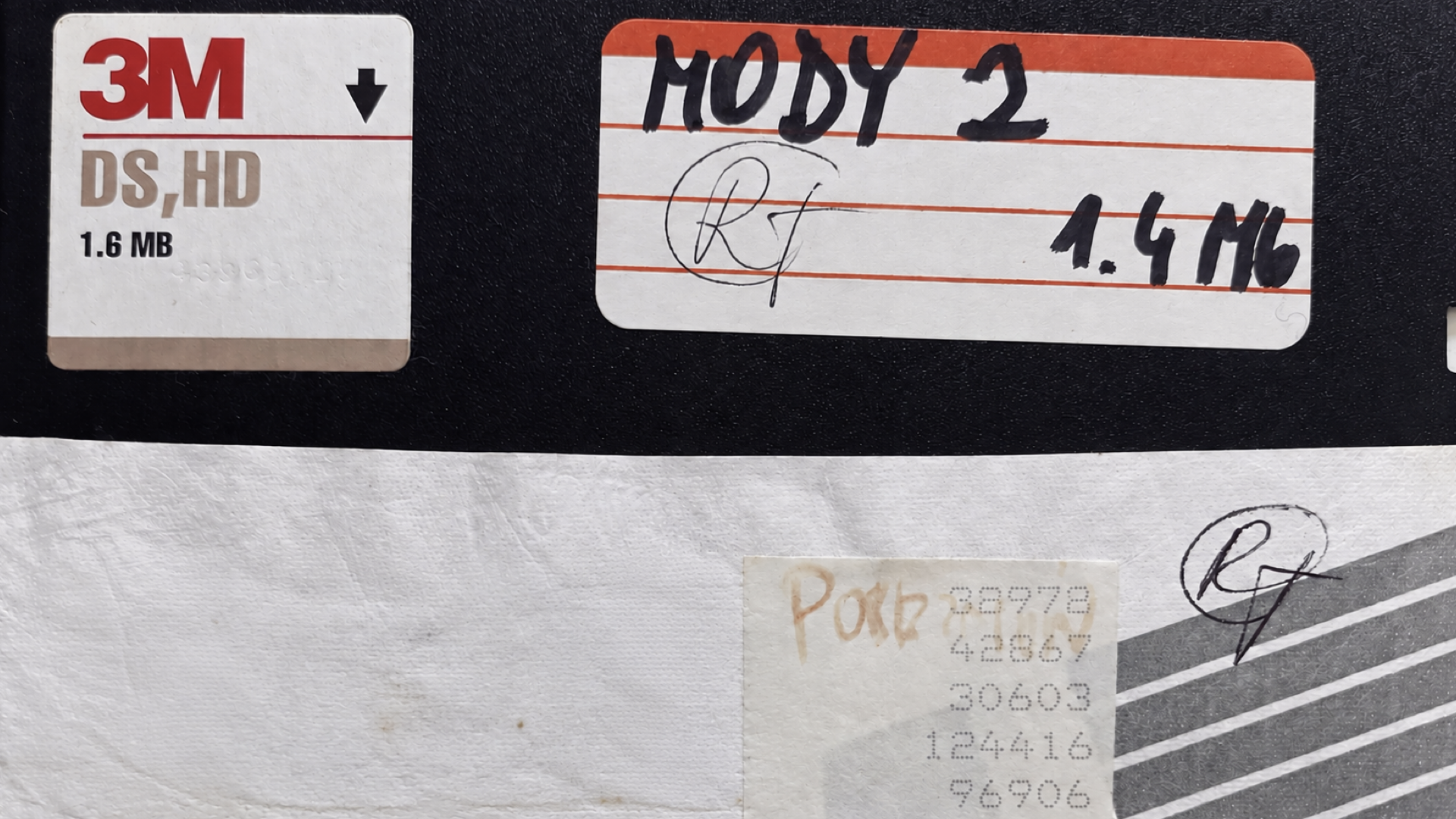
Files preserve artefacts. But is that enough?
Łukasz 'Zenial' Szałankiewicz archive / Kronika Polskiej Demosceny, 2023.
Of course we need to preserve the files: productions, source code, diskmags, photos, letters.
We need to preserve the hardware too.
Digital material disappears frighteningly quickly. Media deteriorates. Websites vanish. Hardware fails. Knowledge about obsolete systems gets lost.
Archives are essential.
But imagine we succeed completely.
Imagine we preserve everything.
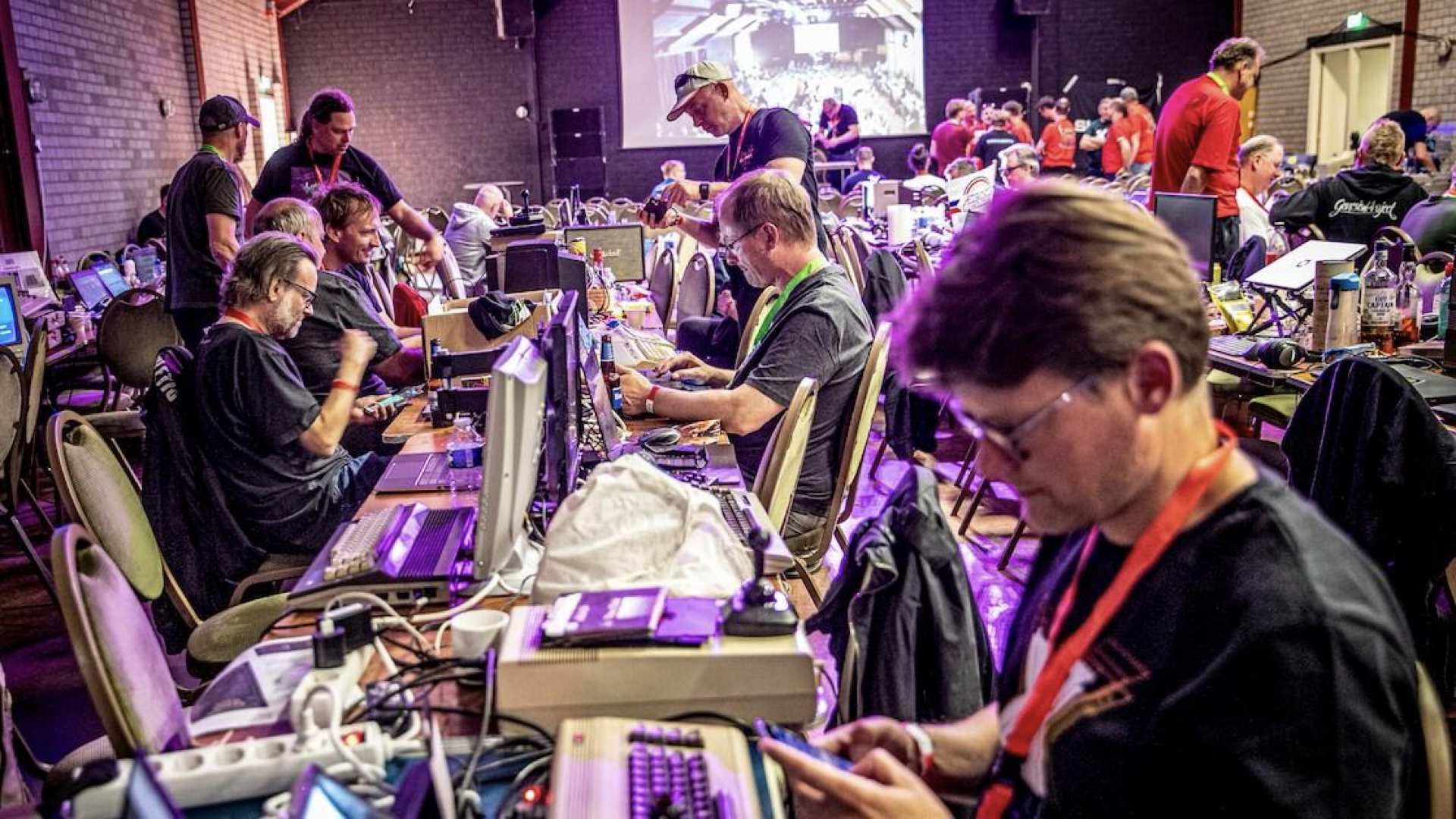
A living community, not an archive of one.
X 2023, Someren / Eindhovens Dagblad
Every demo. Every source file. Every disk. Every photograph. Every letter. Every machine.
A perfect archive.
But nobody makes demos anymore. Nobody organizes parties. Nobody passes the knowledge on. The practices and relationships disappear.
What have we preserved?
An excellent archive of a dead culture.
Not living heritage.
And that leads to another question:
What are we actually trying to safeguard?
For the demoscene, the answer cannot simply be “the files”. Files matter, but so do the people, knowledge, skills, practices and events that allow the culture to continue.
An archive preserves evidence of a culture.
People keep it alive.

Living culture has to become institutional language.
24sedam, 2026
And eventually, we had to translate the demoscene into a language that heritage institutions could understand.
Nobody in the scene says:
“I am participating in the intergenerational transmission of knowledge and skills.”
You say:
“Let me show you how this works.”
Nobody calls a demoparty a “social practice and festive event.”
You just say:
“I’m going to a party.”
But this translation turned out to be useful in both directions.
Demos became cultural expressions. Coding, graphics and music became knowledge and skills. Learning from each other became transmission. The demoparty became a social practice. And the scene became a community.
At first, this language felt bureaucratic and foreign.
But it also gave us a way to see things about our own community that we had previously taken for granted.
And perhaps that is the most useful lesson for other grassroots communities.
You do not have to begin by asking: “How do we become cultural heritage?”
Start by asking who “we” are, what we actually do, how people become part of the community, what is passed on, what changes, what persists — and ultimately, what you want to keep alive.
For me, that became more interesting than the recognition itself.
The demos matter. The disks, machines and archives matter. But the demoscene remains living heritage because people still make demos, meet, share knowledge, bring in newcomers — and keep changing the scene as they do it.
Safeguarding does not mean keeping it unchanged.
It means keeping it alive.